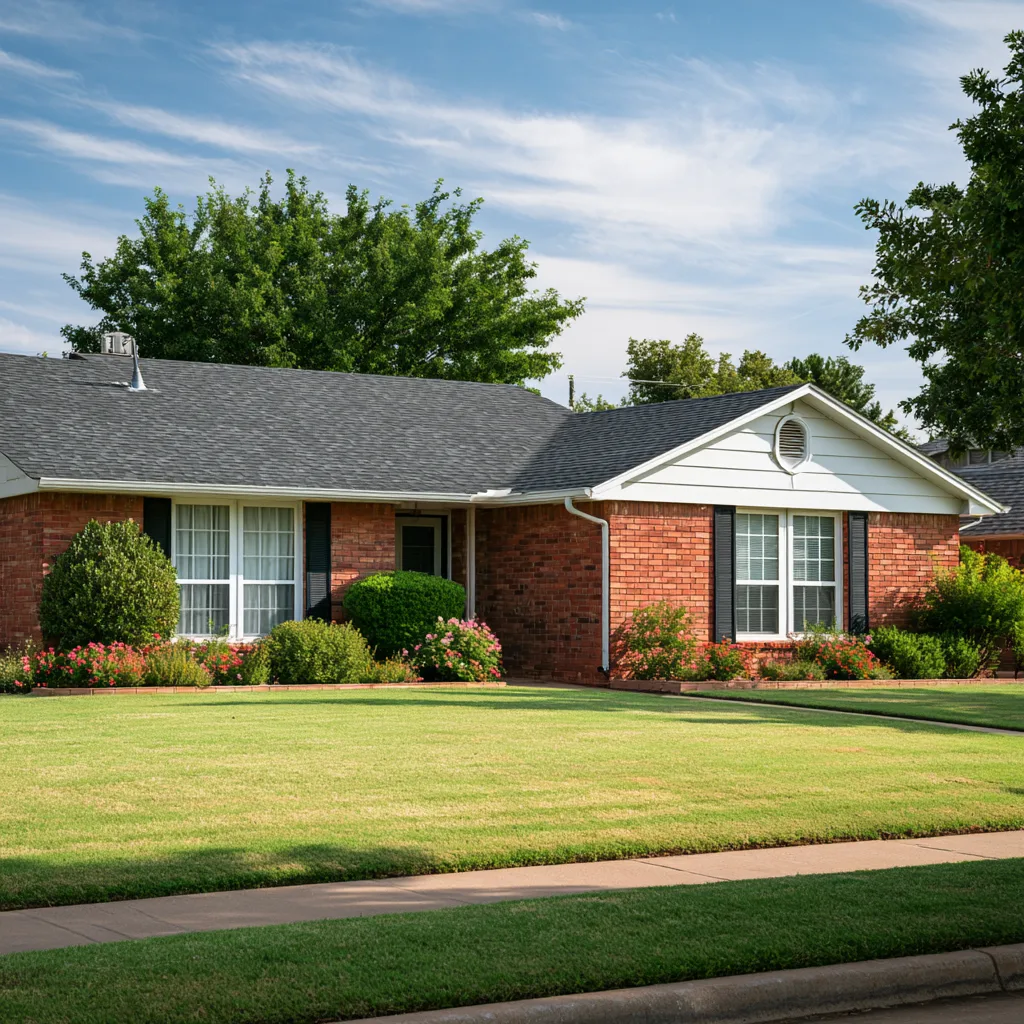
Flashing repair in Red Oak, TX
Leaks at a wall, chimney, vent or roof transition often need the connection rebuilt. Flashing repair restores the overlaps that direct water onto the roof.
Roof flashing repair in Red Oak
Flashing is the transition between roof material and something that interrupts it. Metal and compatible roof components carry water around a wall, pipe, chimney or change in slope. The detail works through its shape and layer order, with sealant used where the system calls for it.
A leak at that connection can recur when only the exposed edge is sealed. The upper portion may be disconnected from the wall, the lower lap may send water underneath a shingle, or nearby wood may already be damaged. A durable repair needs access to the failed parts of the joint.
That is why flashing work sometimes involves more than a small visible strip of metal. Shingle courses, siding or a masonry joint may need to be opened so the repair connects correctly on both sides.
Rebuilding the wall-to-roof connection
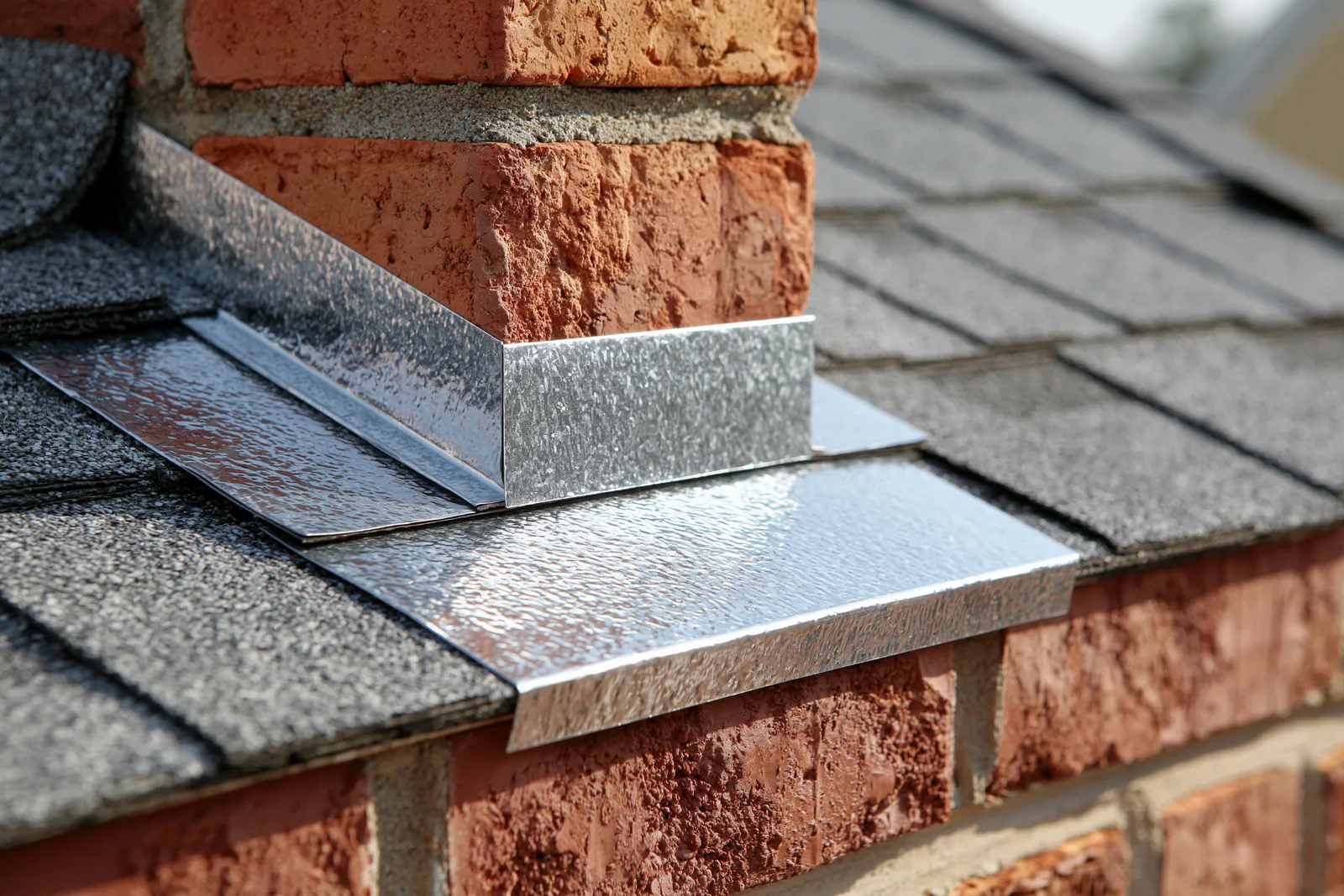
Along a sloping roof beside a wall, step flashing works with successive shingle courses. Each piece sheds onto the course below it, while the wall’s water-control layer directs water over the vertical leg. The top and bottom of that assembly need an exit path for runoff too.
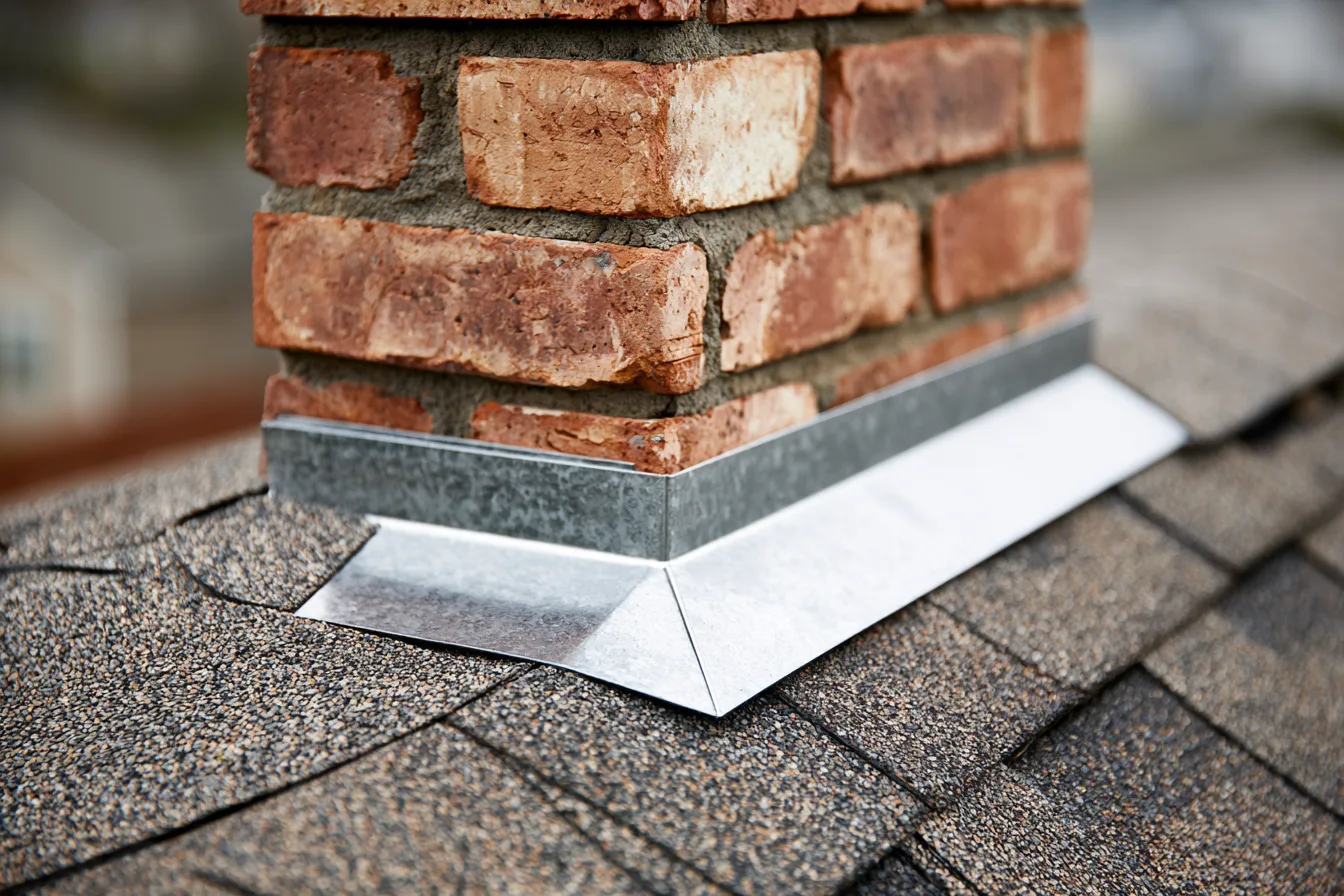
At masonry, counterflashing protects the upper edge of the base flashing. If the brick or chimney itself admits water above the roof, the masonry problem needs its own attention. The inspection should distinguish those entry routes rather than treating every chimney-area stain as a shingle failure.
GAF’s proper-flashing guidance reinforces the need for the correct roof-to-wall arrangement. The exact repair depends on the wall finish and existing roof assembly.
Different flashings need different repairs
The name of the flashing helps explain the work, but inspection of the whole connection sets the scope.
| Detail | Its job | Repair consideration |
|---|---|---|
| Step flashing | Shed water at a sloping sidewall through overlapping pieces. | Shingle and wall-finish access must allow the new pieces to connect correctly. |
| Counterflashing | Protect the upper edge of base flashing at masonry. | The joint or attachment above the base must be sound; masonry leaks remain a separate possible entry. |
| Pipe or vent flashing | Carry runoff around an opening and onto lower roof courses. | Boot condition, flange placement and surrounding shingles all matter. |
| Valley flashing | Carry concentrated runoff between roof slopes. | Open enough of both sides to restore the channel and underlayment without leaving a trapped-water lap. |
| Edge flashing | Direct water off the deck edge toward its intended discharge. | Coordinate the underlayment, covering, fascia and gutter connection. |
Access and materials affect flashing repair cost
The visible metal size is only one part of flashing-repair cost. Height, roof pitch, adjacent shingle condition and access behind the wall finish affect the amount of work. A joint hidden under siding can take more access work than an exposed roof-edge detail.
Concealed deck or wall damage can also change the scope. The proposal should state what will be opened, what the repair includes and how additional damaged material will be handled. Color or finish matching matters, but it should follow a detail that sheds water correctly.
A clear flashing scope includes
Access
Which roof courses or wall materials must be disturbed.
The new connection
How roof and wall layers overlap and where the water exits.
Surrounding repairs
Any known wood, masonry or cladding work needed to complete the connection.
Red Oak flashing repair FAQs
Can flashing just be coated with sealant?
Sealant can belong in a specified joint, but it cannot replace missing metal, reverse an incorrect overlap or connect a roof to a concealed wall layer. Recurring leaks deserve an inspection of the assembly.
Does chimney flashing repair fix cracked masonry?
Not necessarily. Flashing addresses the roof connection. Cracks or other water entry higher in the chimney may need separate masonry work. Both conditions can exist at once.
Will nearby shingles need to come off?
Often enough surrounding material must be removed or lifted to build the flashing correctly. Brittle shingles can increase that repair area because the new work needs sound courses for a tie-in.
Can a small flashing leak damage wood?
Water entering repeatedly can affect concealed wood even when the visible opening is small. The condition may only become clear when the joint is opened. That possibility belongs in the repair discussion.
Get the leaking junction checked
Describe the wall, chimney or vent near the leak, if you know it. A free inspection can help explain which part of the connection needs work.
- Free roof inspections
- Help with repair and replacement
- Questions about your roof welcome