
TPO roofing
A TPO roof depends on welded seams and sound details at equipment, edges and penetrations. Insulation and drainage belong in the scope alongside the membrane.
Explore TPO roofing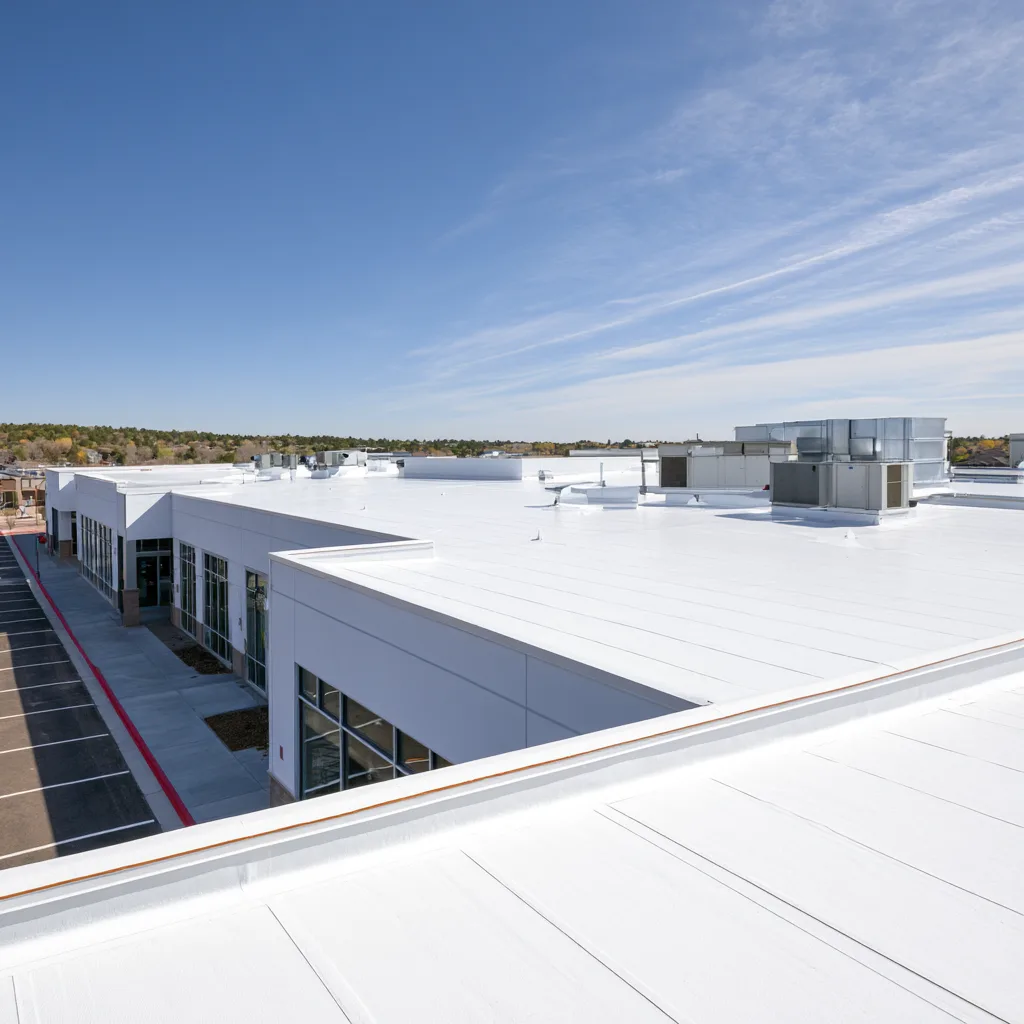
Plan roof repairs, restoration or replacement around the condition of your Red Oak building. Start with a free roof inspection and a conversation about leaks, access and the space below.
A commercial roof problem can interrupt the space below long before the whole covering looks worn. A failed seam over storage, a leaking equipment curb or a backed-up drain each creates a different working area. The first step is to connect that problem with the condition of the wider roof assembly.
The membrane is only the exposed layer. Insulation, attachment, decking and drainage influence whether a targeted repair, restoration or replacement is a sensible investment. A surface that looks dry between rains can still have moisture trapped underneath.
Red Oak Roofing helps building owners start that assessment with a free inspection. Bring the recurring leak locations, known earlier work and any restrictions on roof access into the conversation. The useful outcome is a scope that addresses the roof while accounting for tenants, equipment and daily operations.
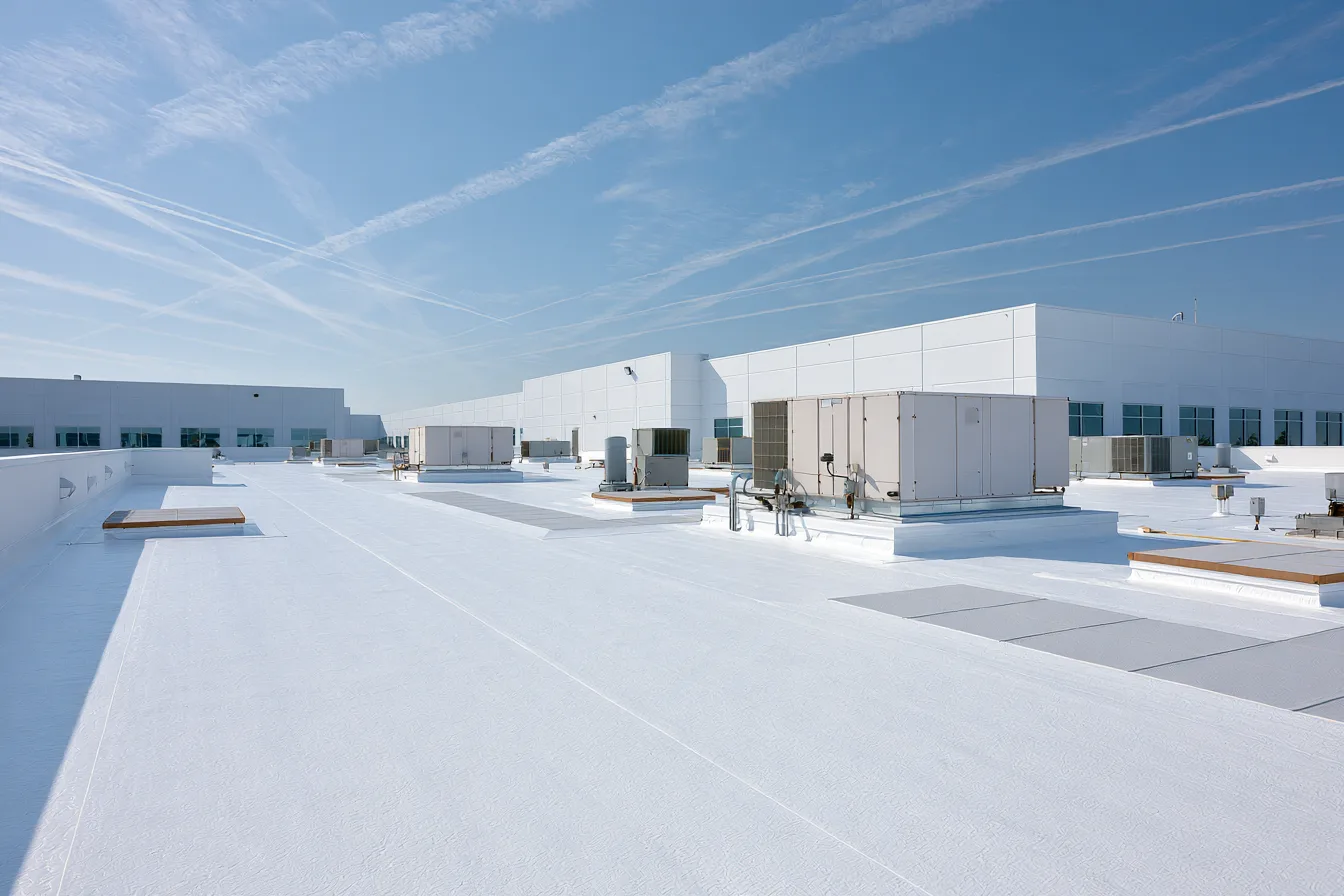
The right approach depends on what can remain in reliable service. Assess the existing assembly before comparing repair, restoration and replacement scopes.
| Approach | When it can fit | What must be addressed |
|---|---|---|
| Targeted repair | A defined seam, flashing or puncture failure within a serviceable assembly. | Compatible repair material, sound adjoining membrane and any wet layers beneath. |
| Restoration or coating | An existing roof that is suitable for the proposed system and can be prepared properly. | Moisture, adhesion, drainage and repairs before the coating is applied. |
| Partial roof work | Damage is concentrated in a separable area with practical, watertight boundaries. | Transitions to the retained roof and the condition of adjoining insulation and decking. |
| Replacement | Widespread deterioration or underlying damage makes retaining the assembly impractical. | Removal, insulation, drainage, edge details, penetrations and the building’s operating needs. |
A system name does not describe a complete installation. The seams, edges, curbs and drainage need to work with the selected material and the building. Explore the work most relevant to the existing roof.
A TPO roof depends on welded seams and sound details at equipment, edges and penetrations. Insulation and drainage belong in the scope alongside the membrane.
Explore TPO roofing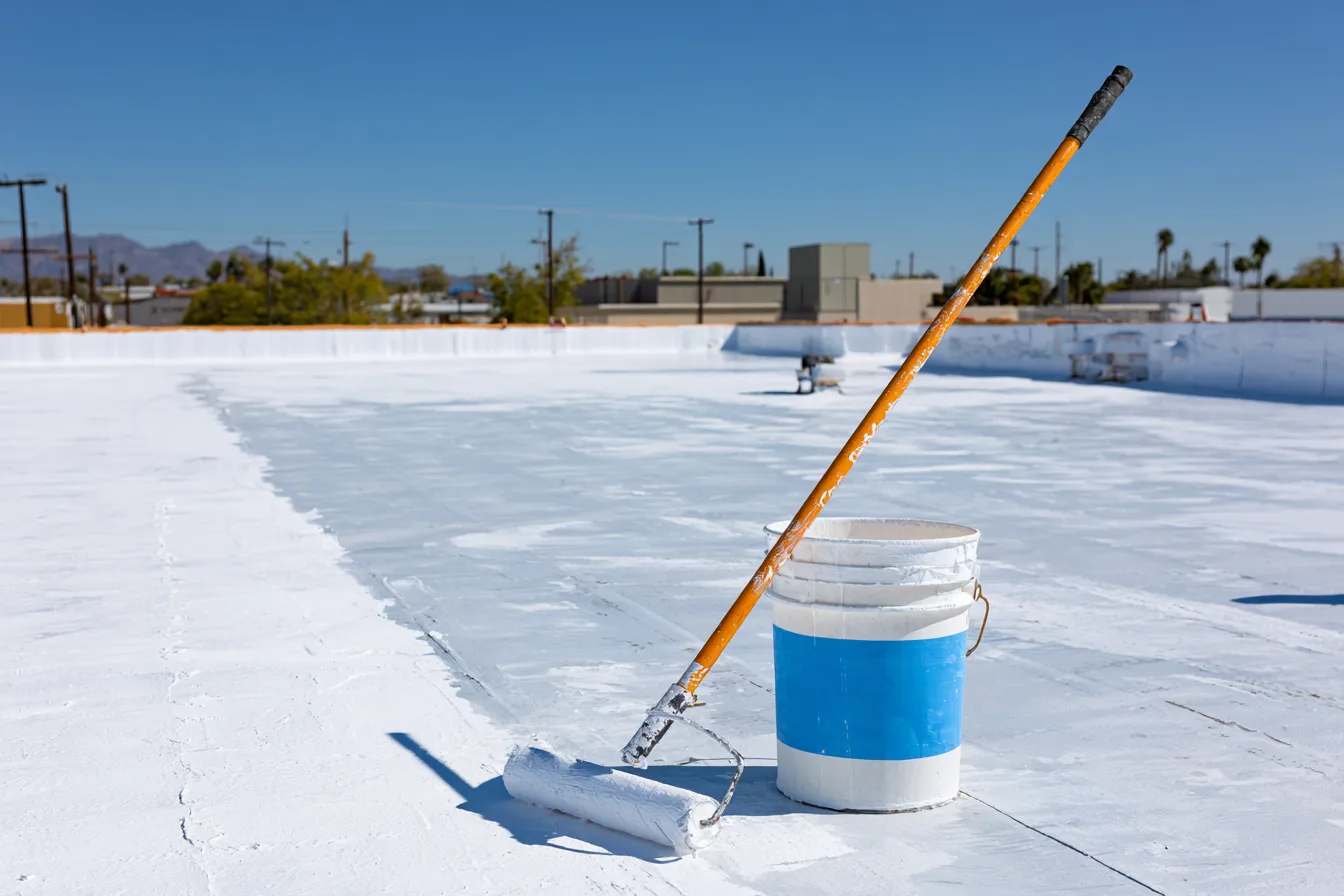
A coating needs a suitable, prepared roof. Moisture and adhesion checks help establish whether the existing assembly can be restored or has material that must come out.
Explore roof coatings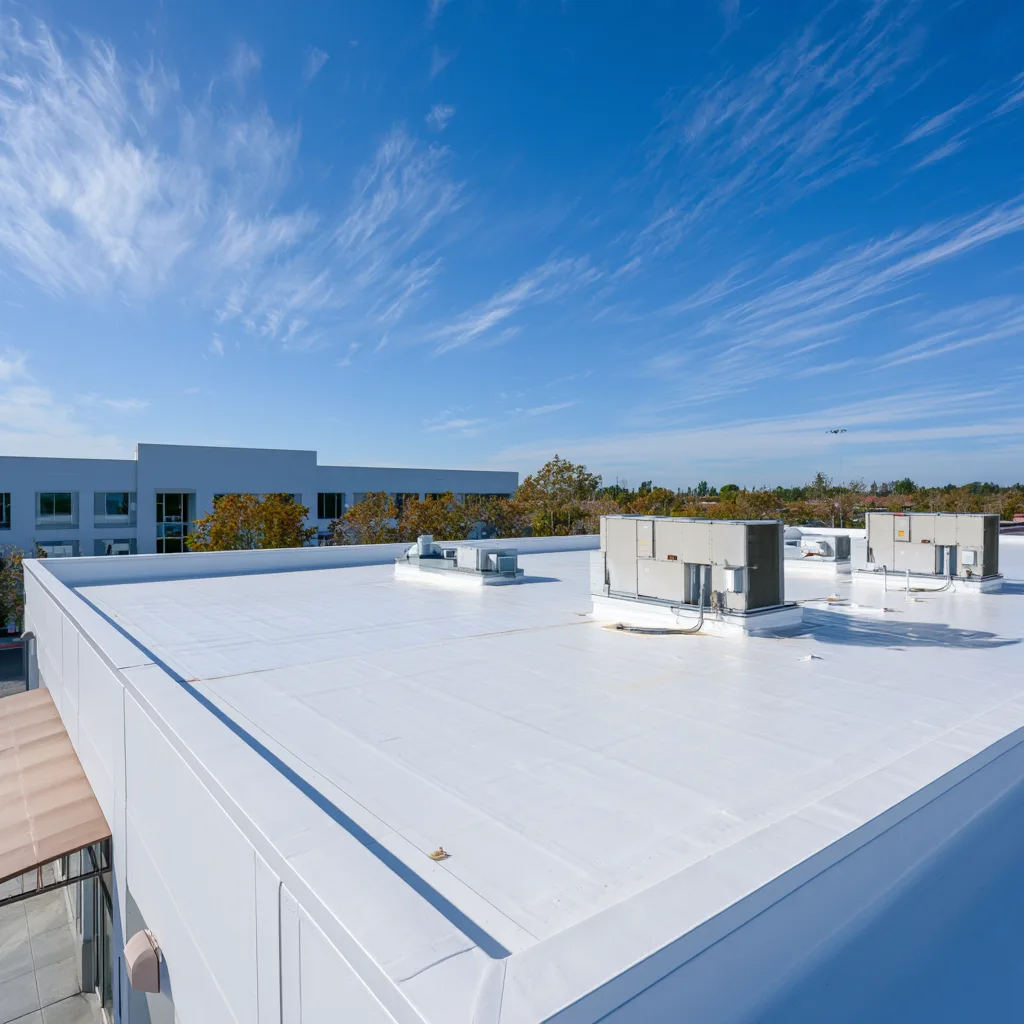
Trace leakage to its entry detail, repair the membrane connection and address affected material below it. Recurring water needs a cause established before another surface patch.
Explore flat-roof repair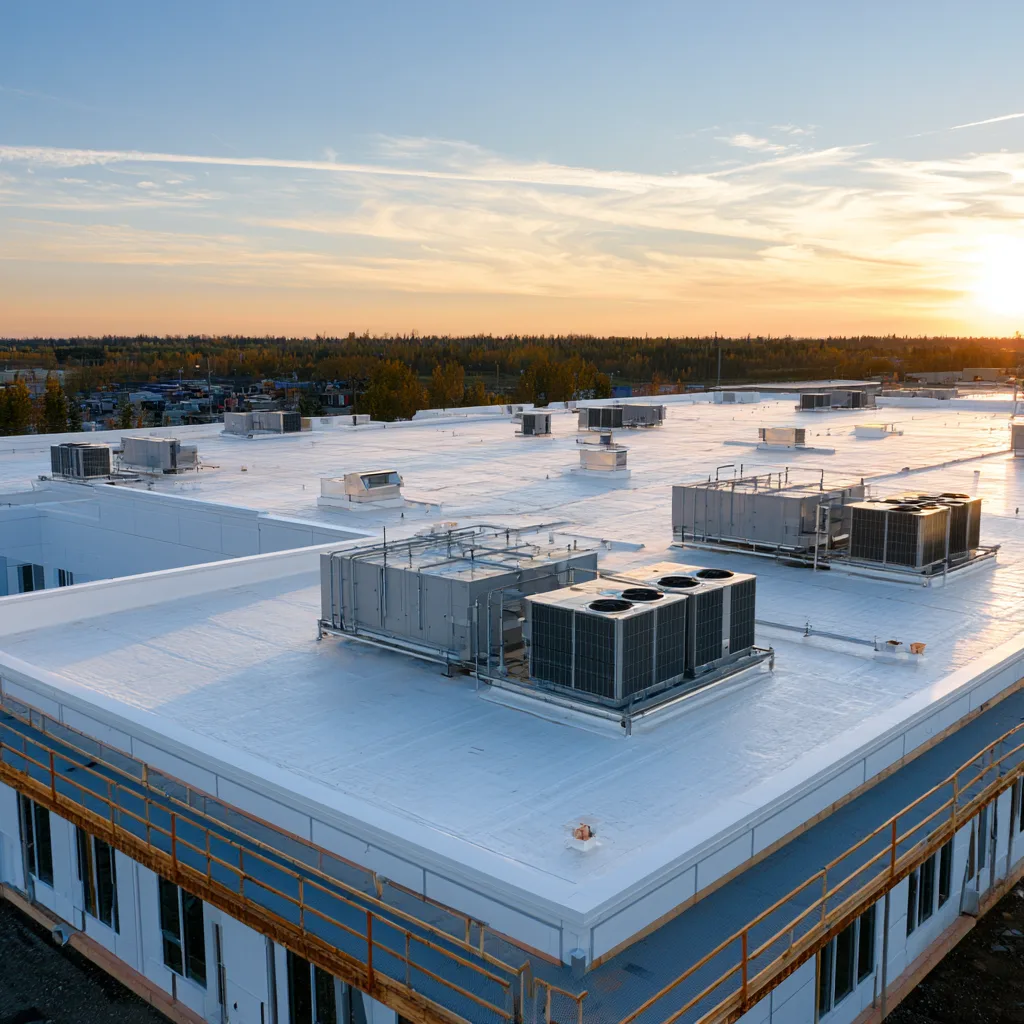
Renew an assembly that is no longer practical to retain. Removal, insulation and drainage belong in the plan along with the new roof surface and perimeter details.
Explore flat-roof replacementWhen water passes through the membrane, it can spread in insulation below the surface. Sealing the entry point does not dry or restore material that has already become unsuitable. Assessment may need investigation beyond a visual walk before the final scope can be set.
That is especially important when considering a coating. A compatible, dry and well-prepared substrate allows the proposed system to do its job. Wet material, loose membrane or failing details have to be dealt with first. Coating over those conditions leaves the underlying problem in place.
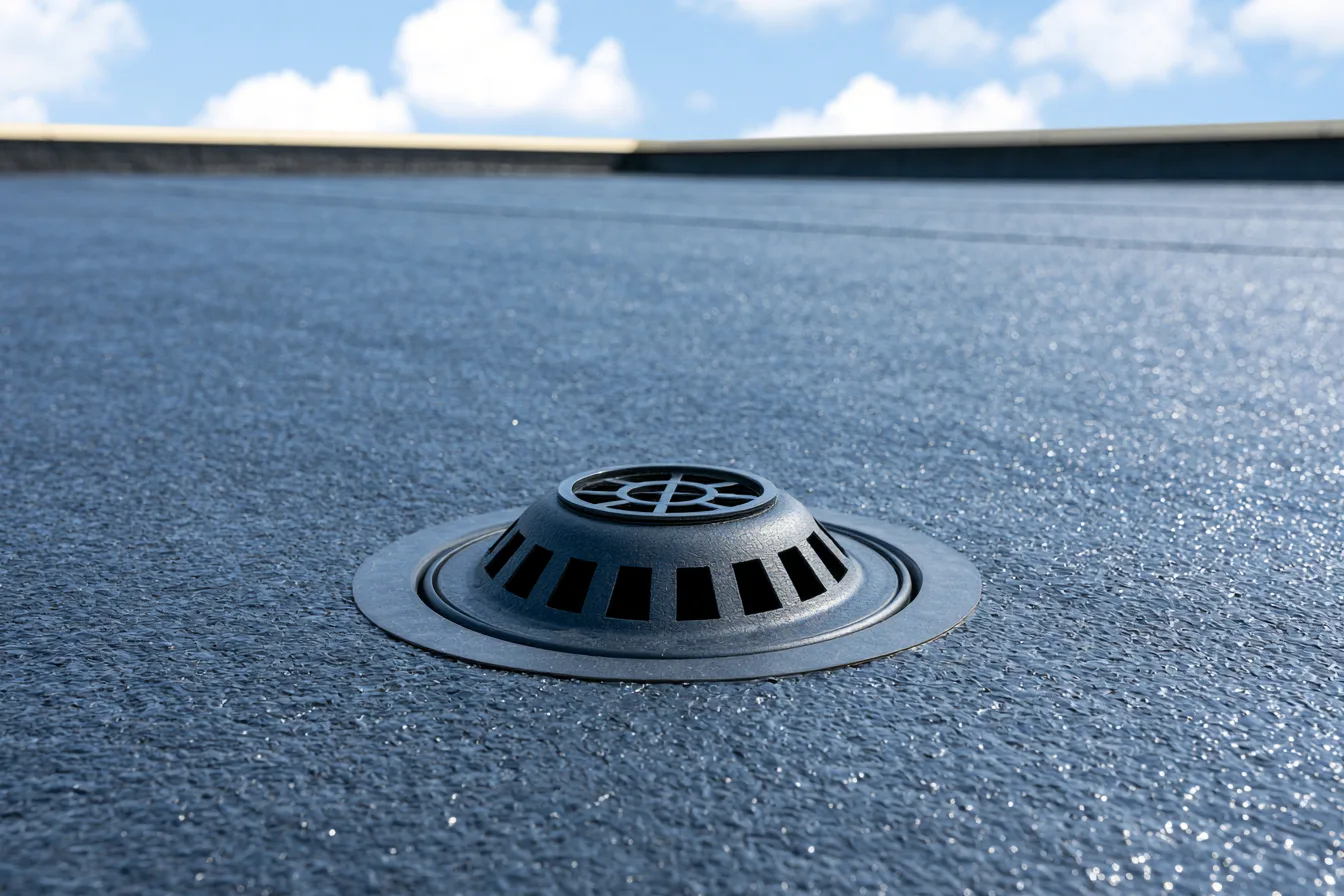
Drains and low areas deserve the same attention. Standing water can be connected to blocked outlets, roof geometry or movement in the assembly. Cleaning an outlet and correcting a drainage layout are different jobs; the cause determines which belongs in the work.
An occupied building needs a roof scope and a practical site plan. Discuss operating constraints early enough for access and staging to be part of the work, rather than a surprise after materials arrive.
Review leak locations, previous repairs and accessible roof details. Identify where concealed moisture or the existing assembly needs further investigation before choosing the approach.
Account for roof hatches, ladders, tenant doors, parking and rooftop equipment. Work involving mechanical or electrical connections may need the appropriate trade coordinated separately.
Decide how materials move, where removed roofing is handled and which parts of the building are affected by each work area. Weather exposure and interior sensitivity shape that sequence.
Discuss the completed roof details, cleanup and the maintenance instructions that apply to the installed system. Drains, penetrations and later rooftop service activity remain useful points for routine attention.
Compare commercial scopes by the assembly and details included, not just the price per square foot. Two proposals can cover the same area while treating insulation, wet material, edge metal and drainage differently. Those differences affect what problem the work actually solves.
A repair can be a useful part of a longer roof plan when the retained assembly remains serviceable. Where failures are widespread, several small jobs can leave the main replacement need unresolved. The assessment should make clear what the proposed work preserves and what it renews.
After work, roof access by other trades still matters. Equipment servicing can disturb membrane and flashing, and blocked drains can change how water leaves the building. Follow the maintenance requirements provided for the actual system and address new damage when noticed.
Existing membrane, insulation and decking that can stay.
Wet or unsound material and the new assembly above it.
Edges, equipment curbs, outlets and transitions between work areas.
It can be an option for a suitable roof, but the roof has to qualify for the proposed coating system. Moisture, adhesion and existing defects matter. A coating is not a substitute for removing wet insulation or correcting a failed connection beneath the surface.
No. A defined failure in otherwise serviceable roofing may be repaired. Widespread deterioration, repeated failures in different areas or damaged underlying layers can make replacement the better scope to discuss.
That depends on the work area, interior use, access and protection needed. Describe sensitive operations, tenant hours and equipment early so the project plan can account for them.
The roof cost calculator uses a standard architectural-shingle example. A commercial flat-roof assembly has different materials, insulation, drainage and access requirements. Request an assessment of the commercial roof for a scope suited to that building.
Share the building location, the roof concern and any access constraints. Request a free commercial roof inspection in Red Oak.