Repair
A localized puncture or detail failure can be addressed when compatible surrounding membrane and a sound base allow it. Include damaged layers below the opening if investigation finds moisture.
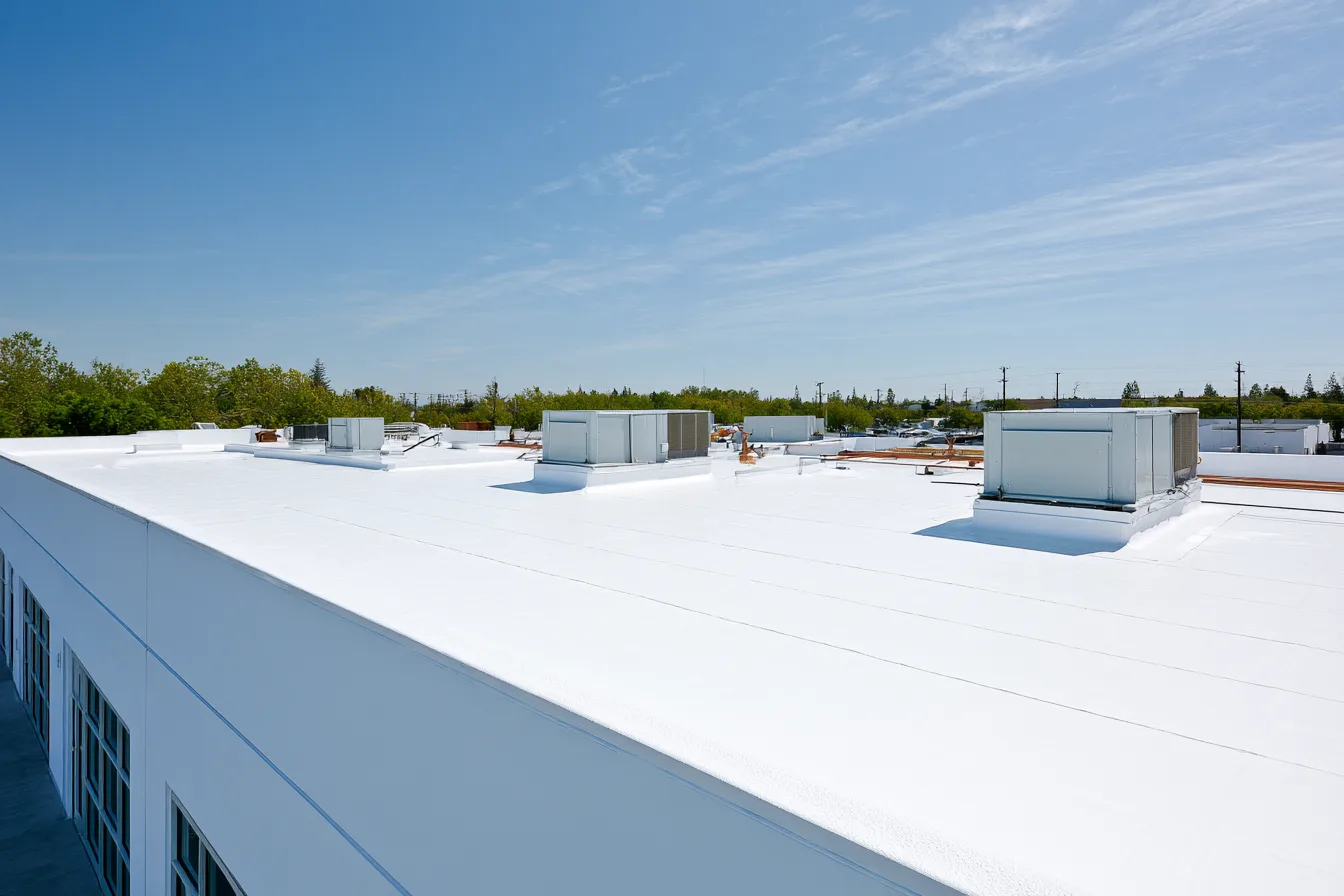
A TPO roof depends on its seams, attachment and details around equipment. Plan repair or replacement with the membrane, insulation and occupied building considered together.
TPO is a thermoplastic single-ply membrane used on low-slope roofs. Its sheets connect through heat-welded seams, while the attachment method and the layers below are selected as part of the roof system. A white surface alone does not identify the membrane or tell you what remains underneath it.
Before repair, identify the existing roof and evaluate the area around the failure. A puncture in otherwise sound material presents a different scope from repeated seam failures or wet insulation. Repair preparation also changes as the membrane weathers or becomes contaminated.
For a new system, the membrane is one part of the assembly. Deck suitability, insulation, drainage, edge metal and equipment penetrations need to be included in the design and proposal. The operating needs of the building belong in that discussion from the start.
Product records help establish the membrane type and specified thickness. Thickness is part of the selected system and repair specification; it does not reveal whether the insulation beneath the surface is dry. Existing attachment and underlying moisture remain separate inspection questions.
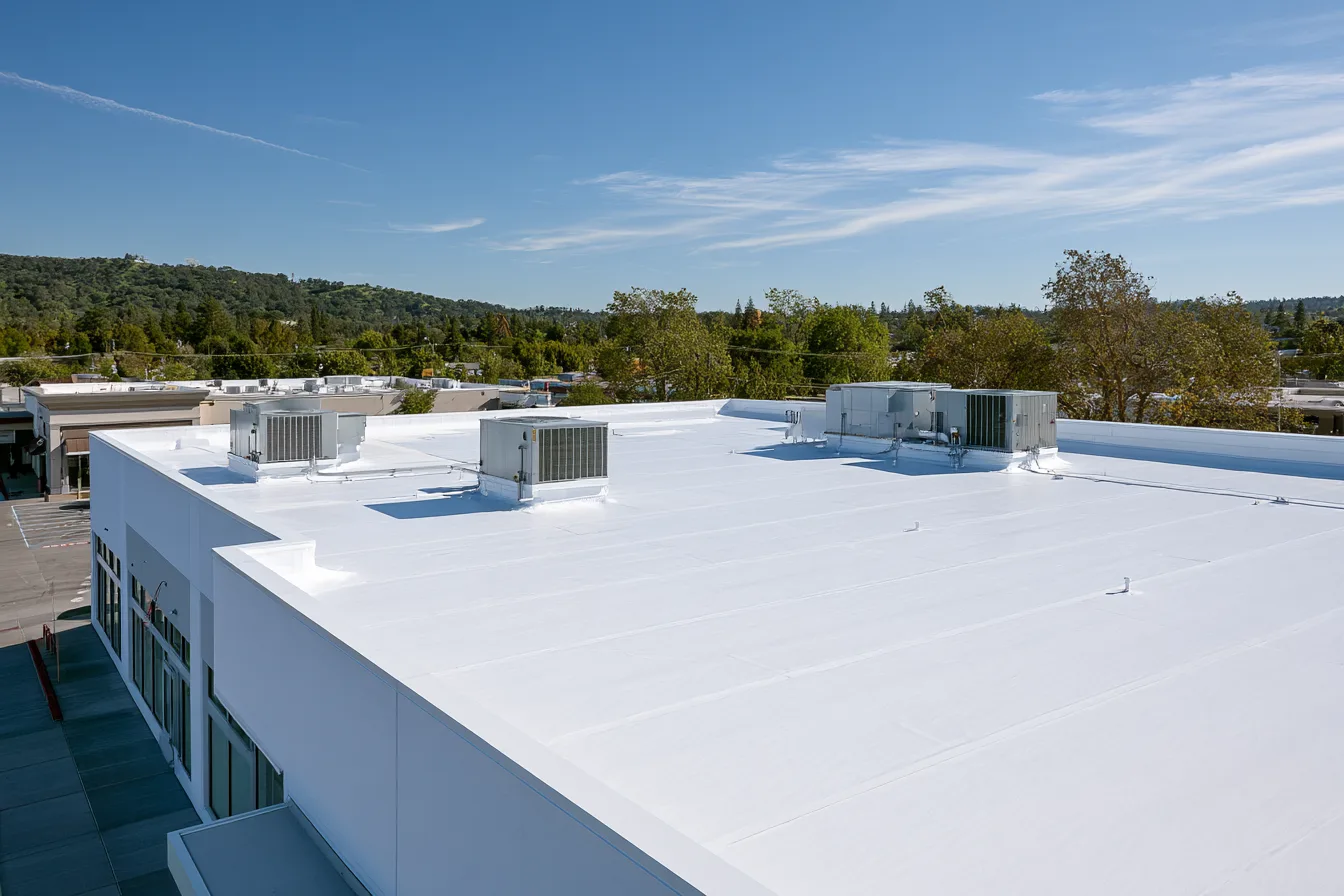
A compatible TPO patch needs a surface that can form the required weld. Dirt, contamination and weathering can affect preparation, so an aged membrane cannot simply be treated like new material from a roll. GAF’s EverGuard guidance calls for system-specific cleaning and examination of completed seams.
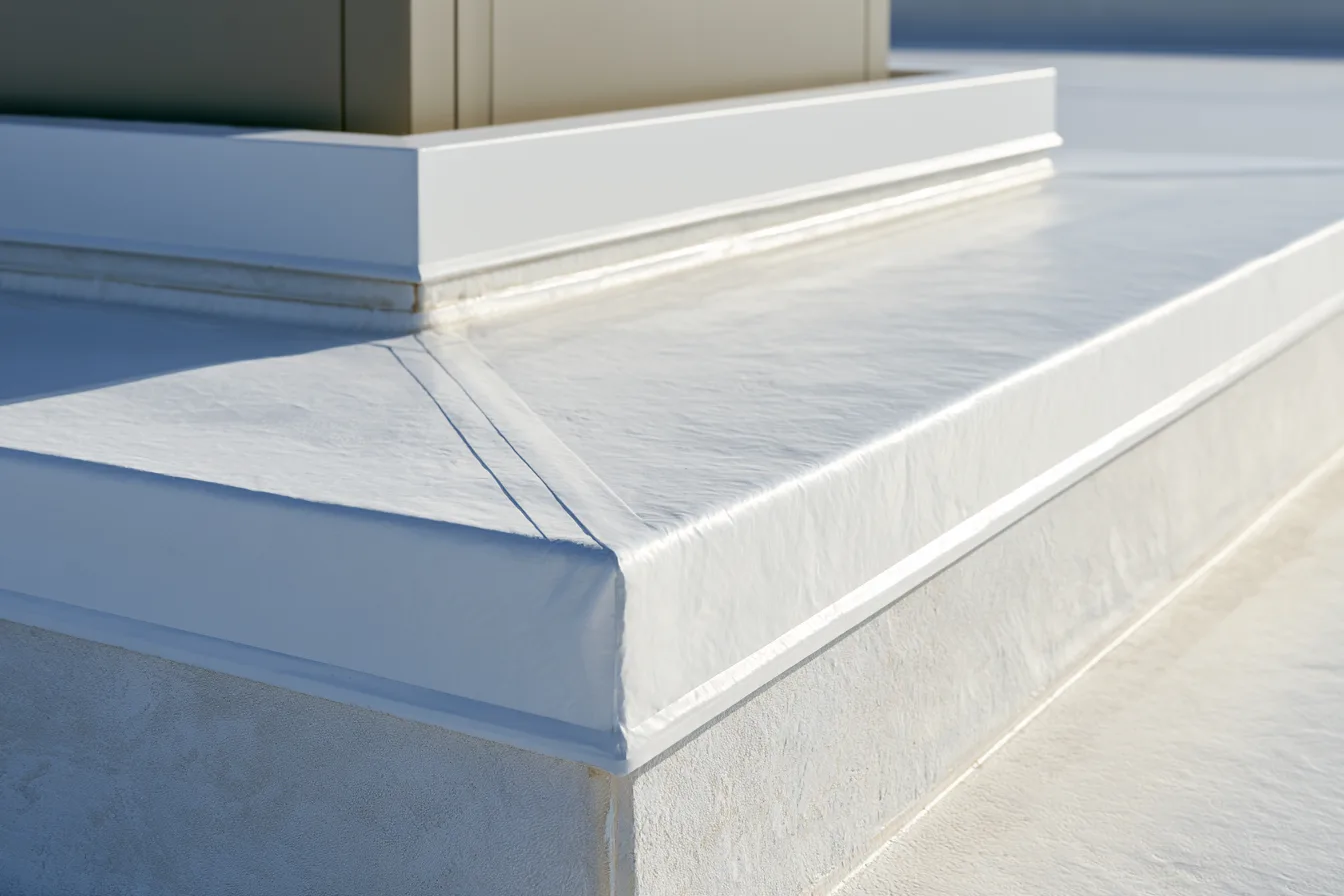
Equipment curbs add changes of plane, corners and terminations. The membrane must connect around those details without leaving a path beneath the surface. Sealant at the top of a curb is not a substitute for the rest of its flashing, and a loose edge may involve attachment as well as membrane work.
The existing assembly determines which option remains practical.
A localized puncture or detail failure can be addressed when compatible surrounding membrane and a sound base allow it. Include damaged layers below the opening if investigation finds moisture.
A new roof over retained layers requires a suitable dry assembly, adequate attachment and compliance with applicable system, load and code requirements. A dry-looking surface does not establish that qualification.
Removing failed layers allows wet insulation, damaged deck and drainage deficiencies to be addressed. This becomes a stronger option when problems are widespread or the retained assembly cannot support a sound recover.
Plan the replacement assemblyA TPO budget depends on more than membrane area. Insulation thickness and layout, attachment design, edge conditions, equipment density and the amount of removal all affect the work. A roof with many curbs and service routes needs more detail labor than an open rectangle of the same size.
Future roof access matters too. Equipment service can leave punctures or disturb flashing. Planned walk routes and checks around completed service work help protect the roof without assuming all damage comes from weather. Drainage outlets need to remain usable so debris does not hold water on the surface.
Identify the membrane, attachment and layers to remain or come off.
Address outlets, low areas and wet insulation findings.
Coordinate tenant routes, equipment work and material staging.
Possibly. The membrane must be identifiable, repairable and prepared for a compatible connection. Widespread deterioration or wet underlying layers can make a small surface patch inadequate.
No. Other membranes and coatings can also be white. Product records and inspection help identify the roof before selecting repair materials.
Only if the work also addresses the cause. An obstructed outlet, inadequate slope and a low area in the assembly require different responses. Membrane replacement alone does not change the roof’s geometry.
The specified system, eligibility requirements, issuer and covered work should be clear. Review the written coverage alongside the roof assembly and installation scope.
Describe the building use, leak location and any known roof records. Start with a free roof inspection to discuss compatible repair or a larger TPO project.