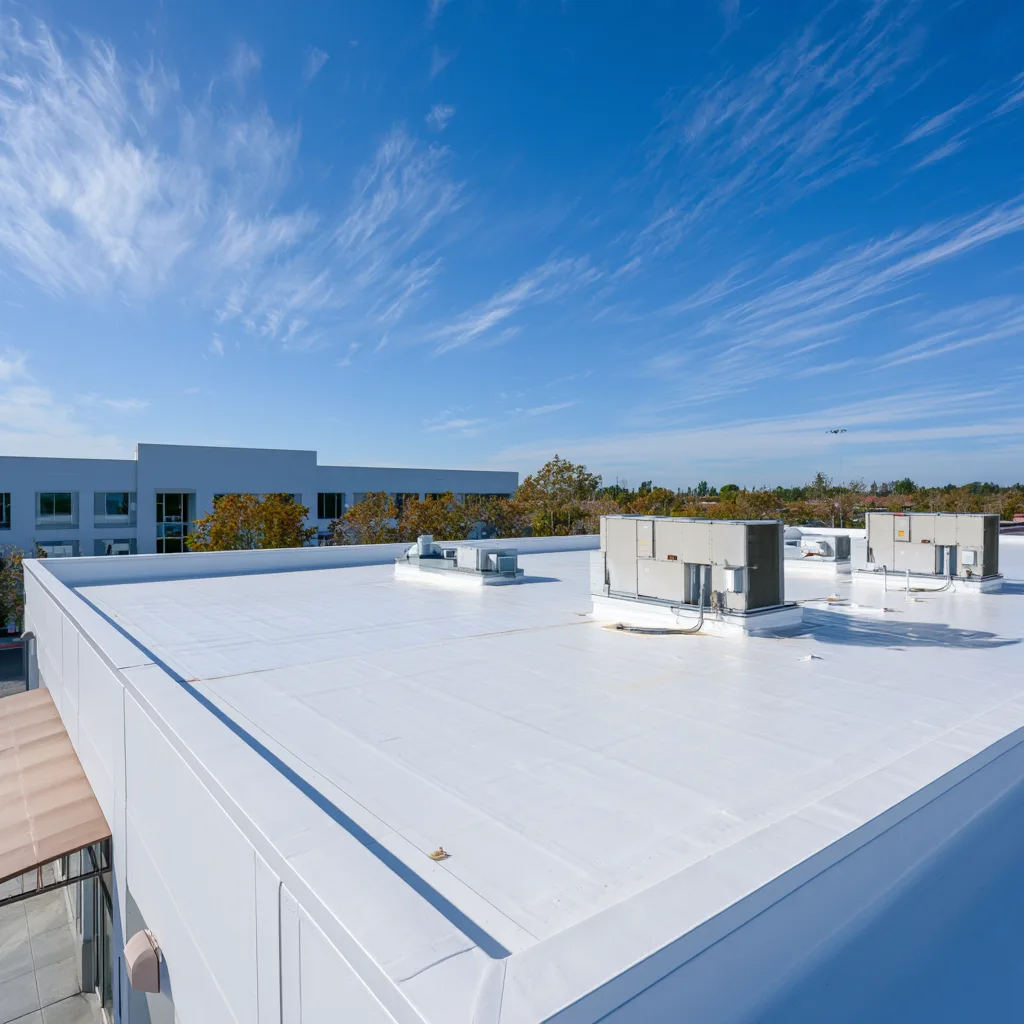
Flat-roof repair in Red Oak, TX
A leak over a shop, office or storage area needs a repair plan that follows the water and respects the building’s daily use. Start with the roof system and the affected detail.
Flat-roof repair for Red Oak businesses
The drip location inside a commercial building may be well away from the roof opening. Water can travel through roof layers or along the deck before it appears below. Equipment curbs, seams, edges and outlets all deserve consideration rather than placing a patch directly above the visible leak.
Identify the existing membrane or roof covering before selecting repair materials. Thermoplastic single-ply, modified-bitumen and other assemblies do not share one universal patch method. An incompatible patch can complicate later work while leaving the original entry unresolved.
A focused repair can be a good choice when the failure is limited and the surrounding assembly remains sound. Repeated leaks, wet insulation or widespread attachment problems may justify a broader investigation before another surface patch is authorized.
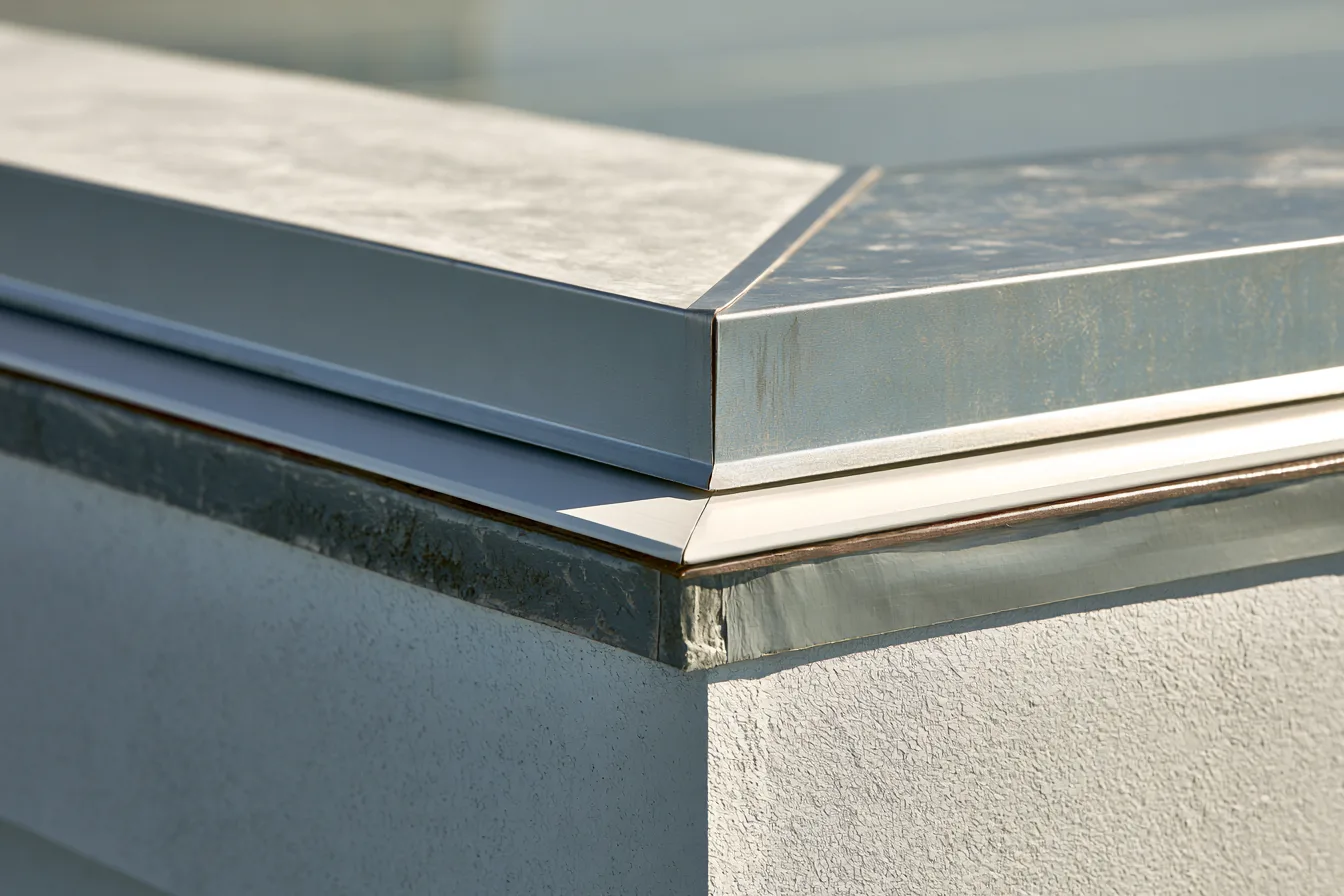
Repairing seams, curbs and roof outlets
The repair should restore the function of the affected connection, not just conceal its surface.
| Location | Repair question | Scope consideration |
|---|---|---|
| Membrane seam | Can a compatible sound connection be made to the existing material? | Identify the system, prepare the surface and use its required seam or patch method. |
| Equipment curb | Where do vertical flashing, corners and top termination admit water? | Coordinate the roof detail with equipment access and any separate mechanical leak. |
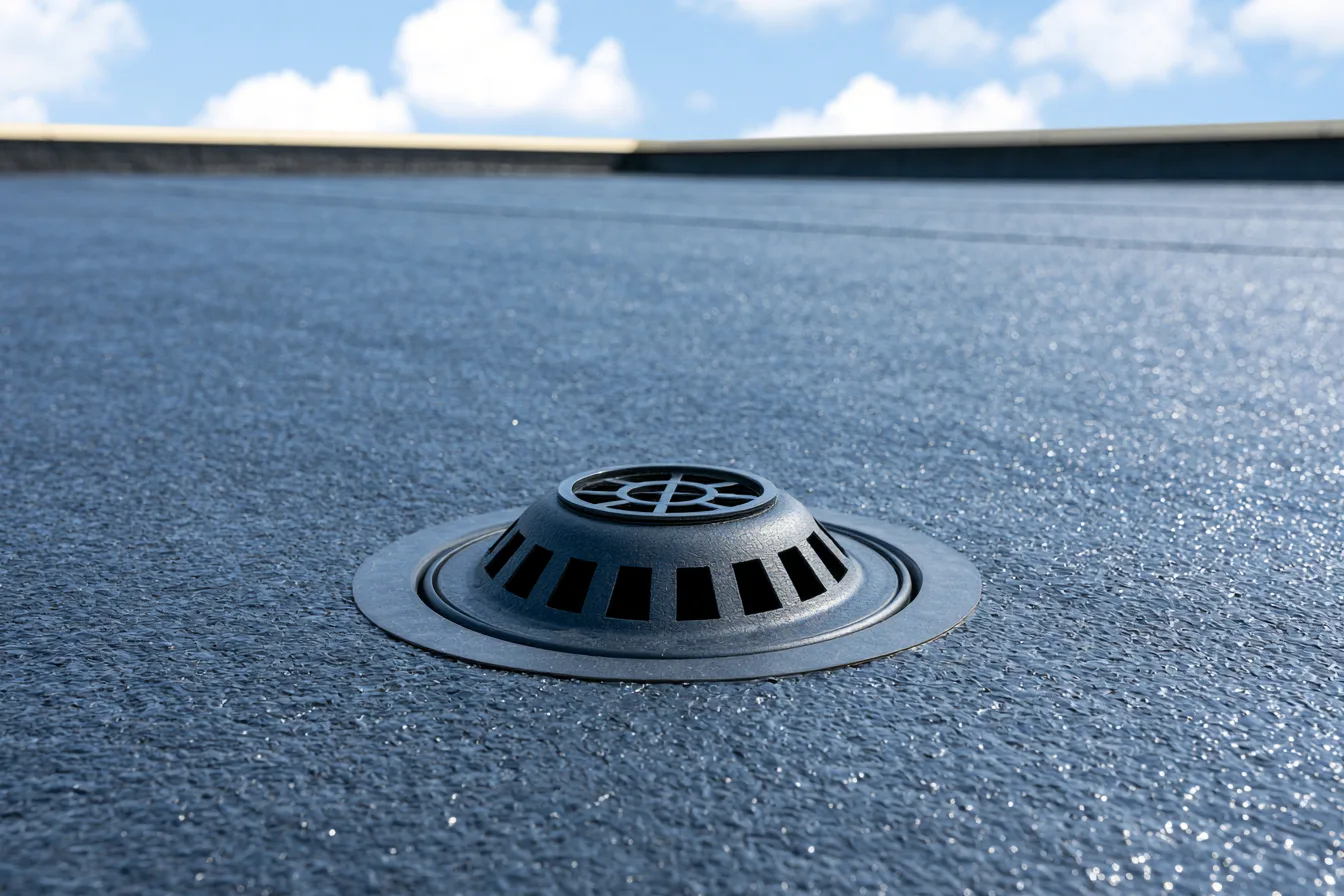
| Drain or scupper | Is water entering at the connection, backing up, or both? | Inspect the outlet detail and the drainage path; clearing debris may not repair a failed flange. |
| Parapet and edge | Are coping, wall transitions or edge attachments admitting water? | Work may extend above the roof field and behind the visible metal. |
| Puncture or traffic damage | Is the surrounding material sound and the layer below dry? | Include any affected insulation and a plan for future service access. |
Drainage changes the flat-roof repair
A blocked outlet and inadequate slope create different jobs. Clearing debris can restore an otherwise functioning drain. A low area that holds water because of the roof geometry may need a change to insulation layout, drainage or the assembly itself.
Standing water also increases the importance of sound seams and penetrations in that area. Repairing an opening without considering how water reaches it can lead to repeated attention at the same spot. The proposal should separate the immediate leak repair from any drainage correction that is needed.
Plan a repair around daily operations
Tell us how the building operates so the roof plan can account for the spaces below it.
Locate the affected use
Identify the room, tenant, inventory or equipment at risk. Discuss safe interior access and any active water entry.
Set roof access and staging
Coordinate ladders or roof access, parking, deliveries and tenant entrances. Keep the work area and falling-debris exposure separate from routine circulation.
Plan the opening and protection
Limit exposed work to what the conditions allow and address temporary weather protection. Concealed wet layers can change the work once opened.
Restore the detail and access route
Complete compatible repair and consider how later equipment service can reach the area without disturbing the work.
Red Oak flat-roof repair FAQs
Does a flat roof need to be completely level?
No. Low-slope roofs still need a workable drainage path. The surface can look flat from the ground while using slope and outlets to move water.
Can a commercial roof leak come from equipment?
Yes. Mechanical equipment and its drainage can create water symptoms separate from the roof membrane. The inspection should distinguish those sources and coordinate the appropriate work.
Can a small puncture hide a larger wet area?
Yes. Water can spread beneath a small entry. The repair scope may need investigation of surrounding insulation or deck rather than assuming the visible opening defines every affected layer.
When is another patch no longer a good use of money?
When the surrounding assembly cannot support a durable repair or the failures are widespread, repeated patching may leave the main problem untouched. A replacement or qualified restoration discussion should explain those conditions.
Compare coating suitability and replacement planning.
Describe the leak and building use
Give the building address, affected space and whether the leak is active. Arrange a free inspection to discuss the repair and its effect on daily operations.
- Free roof inspections
- Help with repair and replacement
- Questions about your roof welcome